On Friday, July 3, 2026, the Cité de l’Innovation et des Savoirs d’Aix-Marseille (CISAM), in partnership with the French National Center for Space Studies (CNES) and the European Space Agency (ESA), brought together academic and socio-economic stakeholders for RDV Innovation #13, dedicated to biology in space. Covering topics ranging from the current state of the art to funding challenges and practical applications, the morning session highlighted the growing potential of this interdisciplinary field.
Held in the morning at the Accélérateur M, the event brought together nearly fifty participants for four main sessions, including an institutional introduction and a segment dedicated to the state of the art and funding. Speeches by Charlie Barla (Vice President for Commercialization and Innovation at Aix-Marseille University) and Maryline Crivello (Vice President of the amU Board of Directors) underscored the strong commitment to strengthening ties between academic research and the socio-economic sector, while promoting interdisciplinarity. Jérôme Perrin (Executive Director of the SAFE cluster) and Emmanuel Le Bouder (Head of Innovation at Eurobiomed) highlighted the pivotal role of competitiveness clusters in industrial development and in supporting innovators. The session dedicated to space biology highlighted the existing ecosystem, particularly through presentations by CNES, MEDES, and academic and industrial stakeholders, confirming the growth of a sector with strong scientific and technological potential.
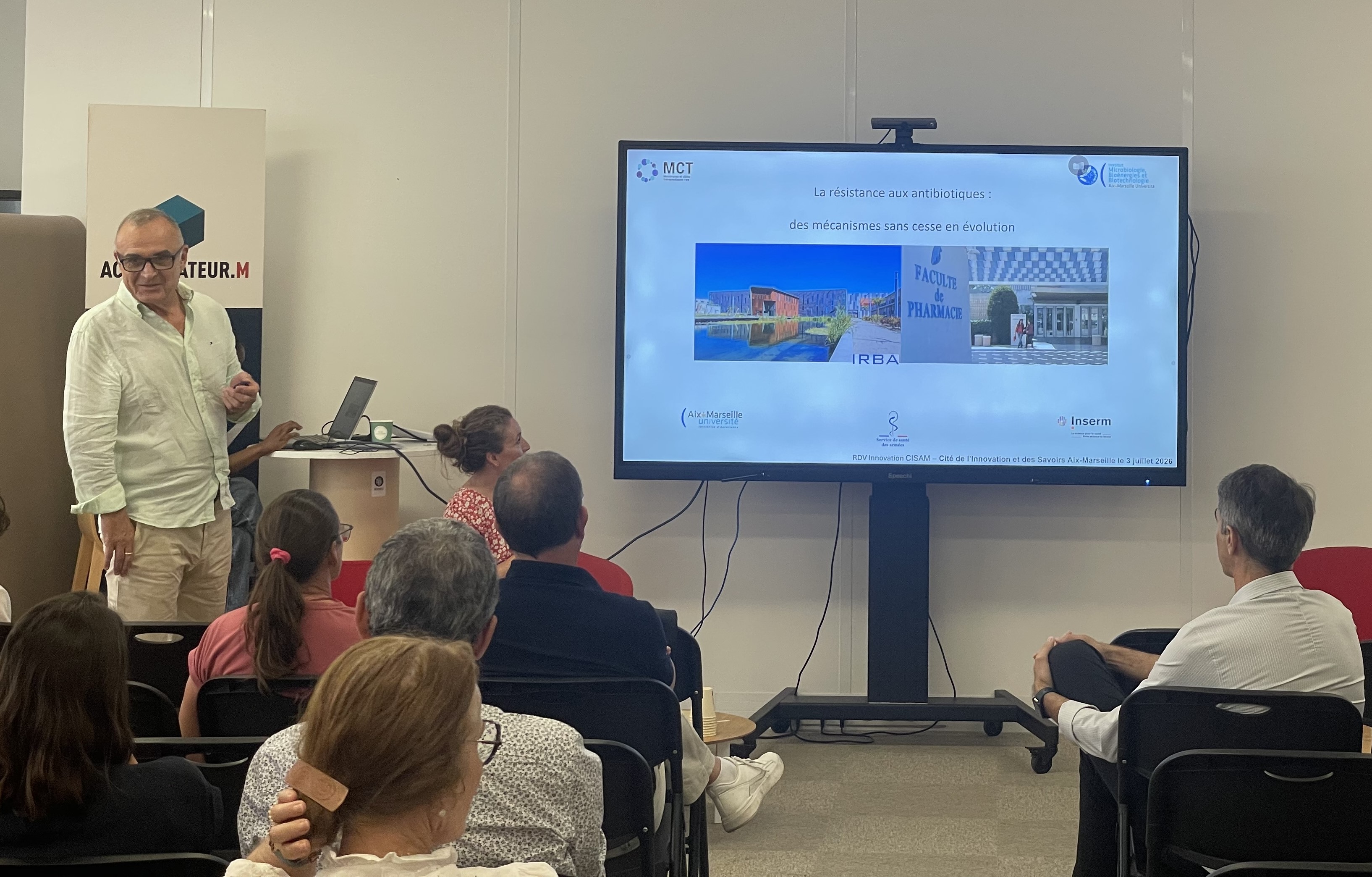
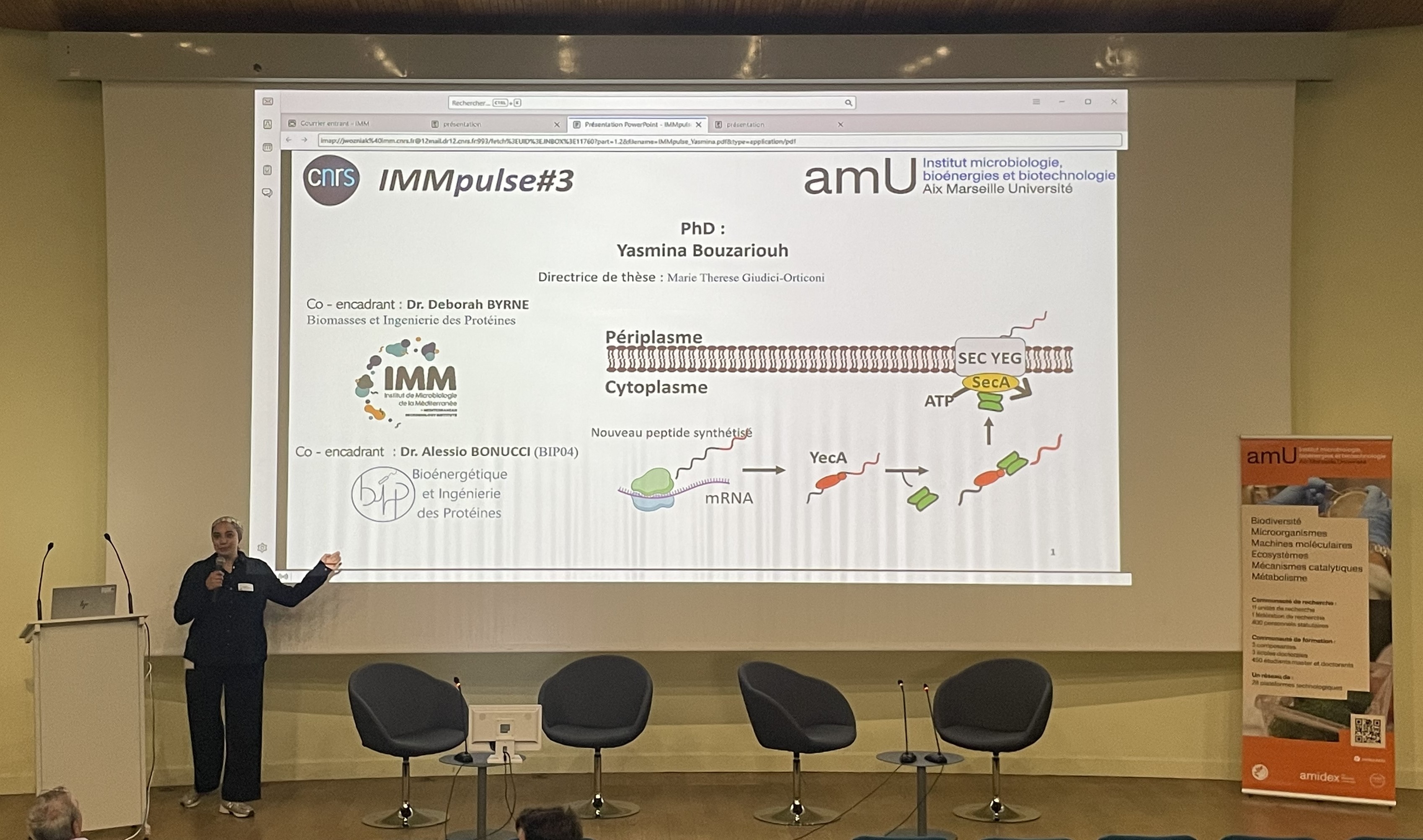
The session on microbiology and bacteriology highlighted the contributions of the IM2B laboratories. Deborah Byrne, director of the Mediterranean Institute of Microbiology (IMM), presented the institute’s technological platforms, areas of expertise, and capacity for collaboration with both academic and industrial partners, emphasizing their role in training and innovation. For his part, Jean-Michel Bolla, director of the Membranes and Therapeutic Targets (MCT) laboratory, detailed the research being conducted on the mechanisms of bacterial resistance, with a particular focus on impermeability and membrane flux phenomena. Their presentations demonstrated the relevance of the research conducted by IM2B’s researchers, potentially opening up new avenues in healthcare and biotechnology within the space sector, where weightless conditions provide a unique environment for research.


