Abstract:
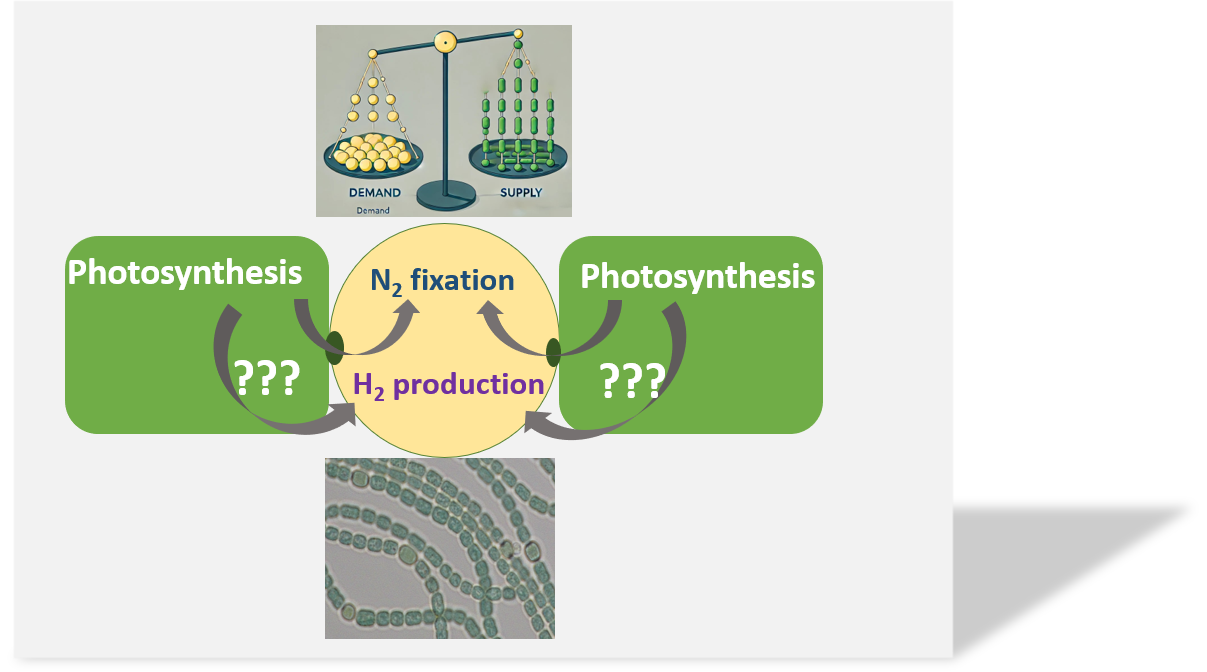
Oxygenic photosynthesis was a pivotal event in Earth's history, enabling organisms to convert light into chemical energy, fixing CO2 and producing O2, which supported the evolution of aerobic life. Cyanobacteria are unique as the only prokaryotes capable of both oxygenic photosynthesis and nitrogen fixation, making them key models for research and biotechnology. Nitrogen fixation, catalyzed by nitrogenase, is highly sensitive to O2, creating challenges for cyanobacteria, which solve this through specialized heterocysts that maintain an anaerobic environment for nitrogen fixation while neighboring vegetative cells handle photosynthesis.
In heterocysts, sugars from vegetative cells are broken down via the oxidative pentose phosphate pathway, generating NADPH and ATP for nitrogen fixation. This balance is essential for survival, but the transfer of carbon and reductants can limit efficiency. A promising bioengineering approach involves heterocysts producing hydrogen by introducing hydrogenase enzymes. Previous experiments raised bioenergetic questions about how reductants are supplied to heterocysts during hydrogen production, highlighting the need to understand carbon and electron transport in engineered strains.
The REBONC project aims to deepen understanding of bioenergetic trade-offs in cyanobacteria by studying photosynthesis and nitrogen fixation in engineered strains, with the goal of enhancing productivity for biofertilizer and bioenergy applications. The project aligns with Horizon Europe's goals of renewable nitrogen use and advancing agricultural resilience
Graphical abstract of the REBONC project (Credits: Amel LATIFI)