Abstract:
Platelets are small blood cells that help stop bleeding by forming clots, but they can also cause life-threatening, clots that stop blood flow to tissues and organs leading to heart attacks or strokes. Most current anti-platelet drugs reduce clotting, but also increase the risk of bleeding, which is a major problem.
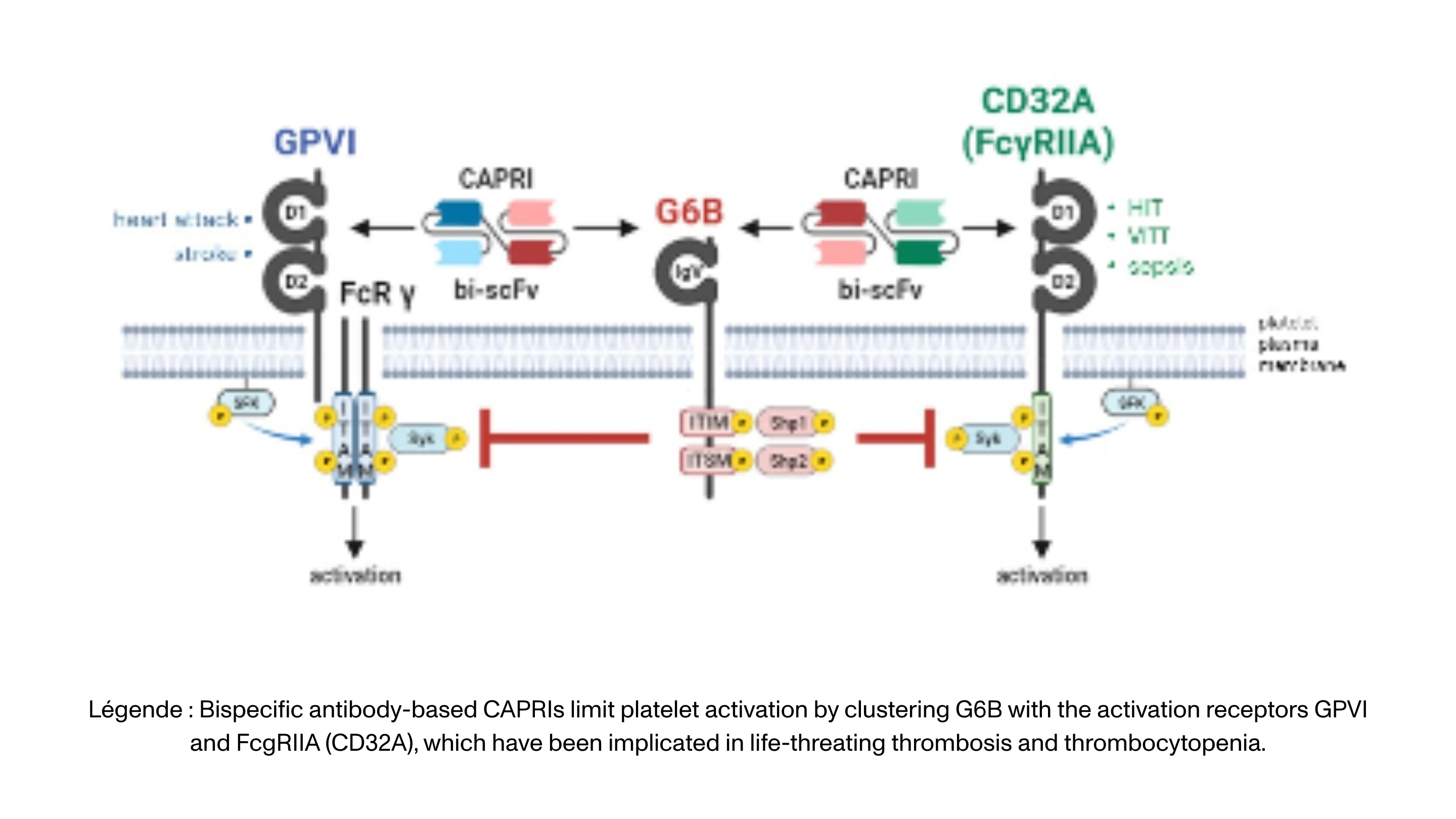
In this project, researchers present a new strategy to prevent harmful clot formation without severely affecting clotting. They developed innovative bispecific antibody molecules called cis-acting platelet receptor inhibitors (CAPRIs) that work by limiting specific platelet activation signals rather than completely blocking these critical pathways. CAPRIs bring together a natural inhibitory receptor on platelets (G6B) with activating receptors that are responsible for thrombus formation, including the collagen and immunoglobulin receptors GPVI and FcgRIIA (CD32A), respectively.
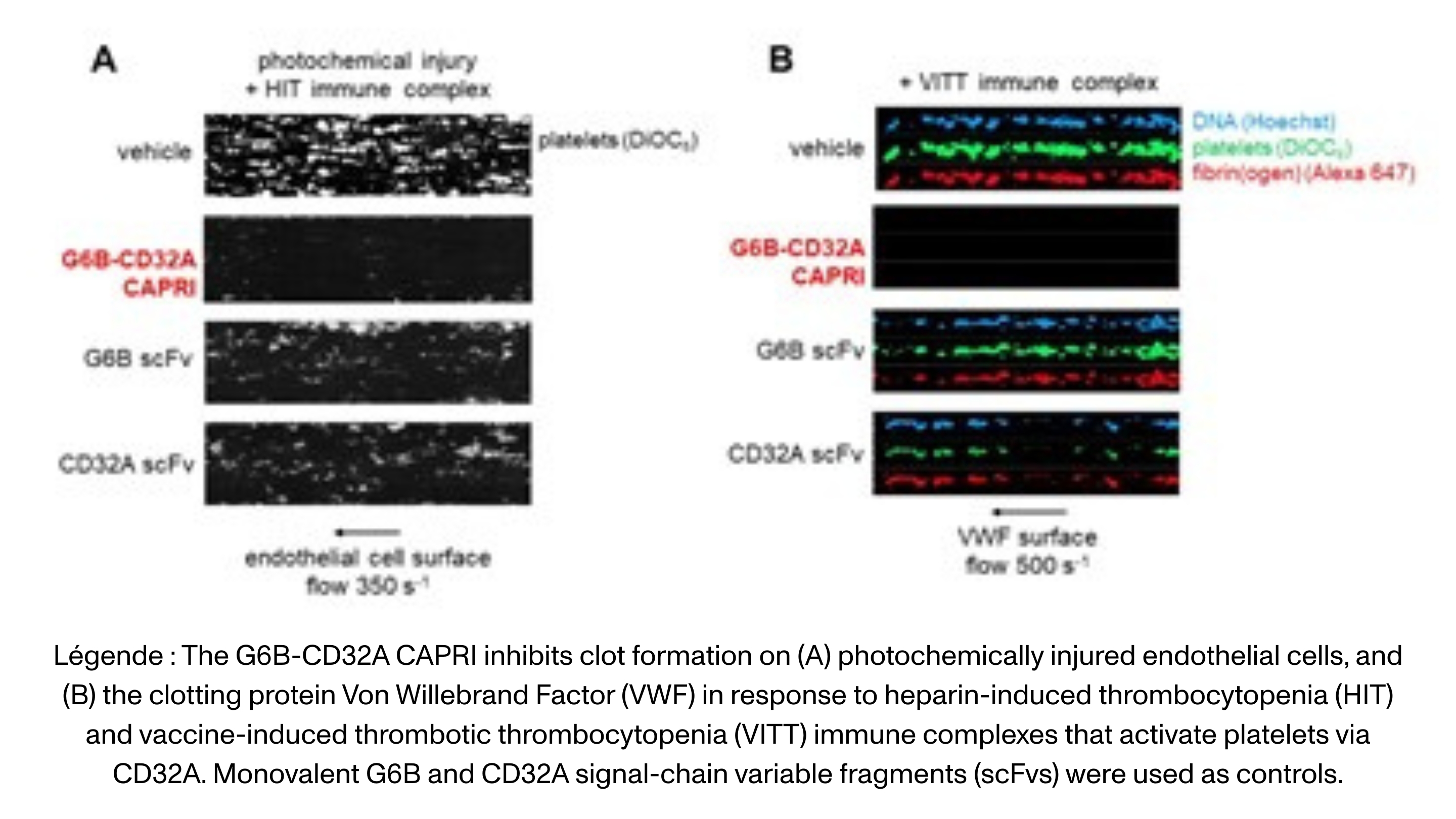
By doing this, CAPRIs effectively prevented platelet activation caused by collagen or immune complexes in several disease-related models, including arterial thrombosis, heparin- and vaccine-induced thrombocytopenia (reduced platelet count) and thrombosis (HIT and VITT), antiphospholipid syndrome (APS), and sepsis. Importantly, these effects were seen under conditions that closely mimic blood flow in arteries.
Overall, this research reveals that CAPRIs can selectively block harmful platelet activation pathways. This approach could lead to a new class of anti-thrombotic treatments that are effective at preventing pathological blood clotting while potentially causing fewer bleeding side-effects than current therapeutics.
Inter-institute project: IM2B - ICI
Harnessing G6B using cis-acting platelet receptor inhibitors (CAPRIs) (credits Mazharian et al. BioRxiv 2024):