Abstract:
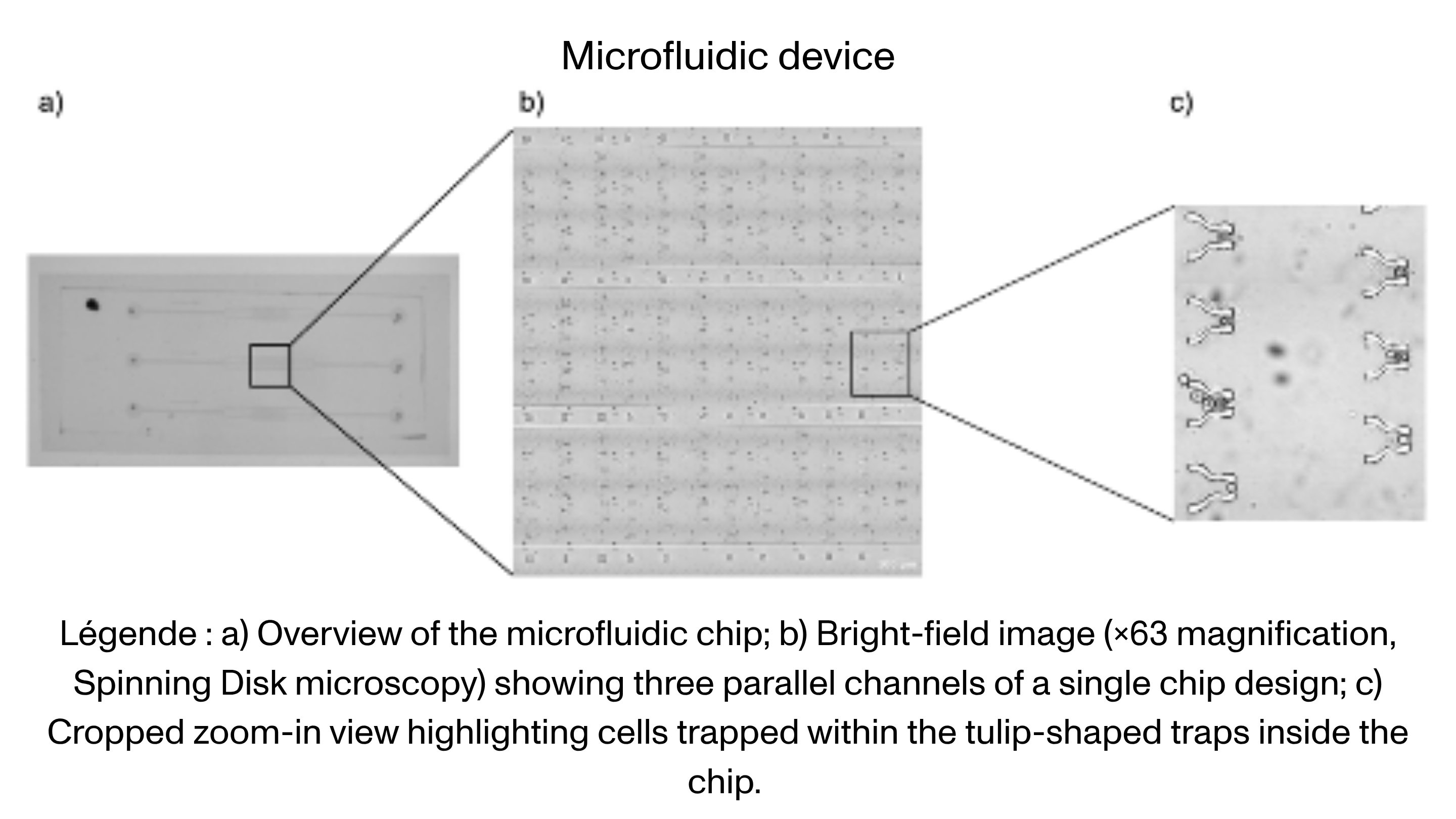
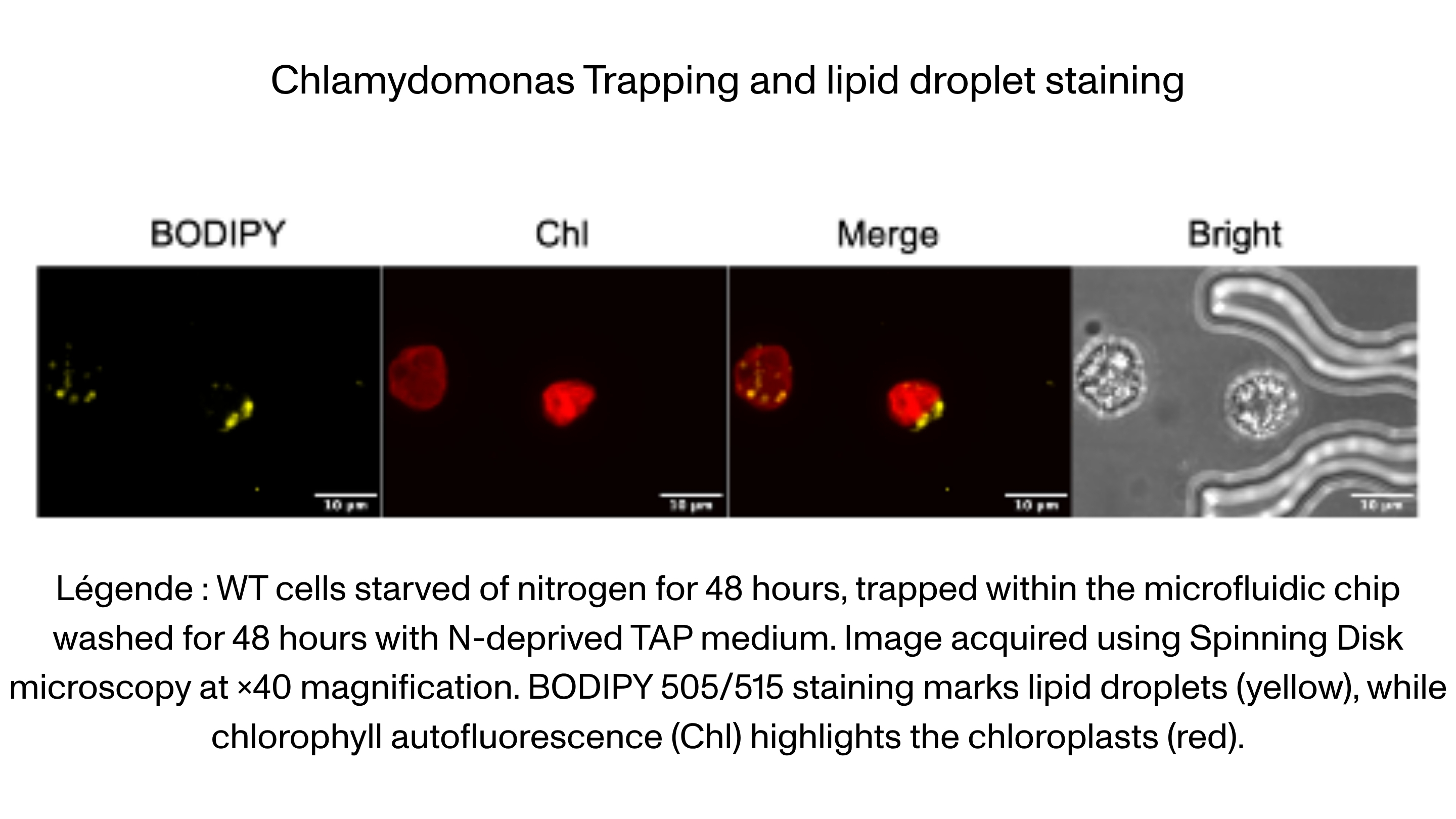
Lipid droplets (LDs) are dynamic organelles that play a pivotal role in the cellular response to environmental stress by facilitating energy storage and lipid metabolism. In Chlamydomonas reinhardtii, the degradation of triacylglycerols (TAGs) stored in LDs during nitrogen (N) resupply represents a critical metabolic switch, yet the mechanisms driving LD remodelling and interaction with other organelles remain poorly understood. The objective of this study was to elucidate the role of the DGTT3 gene, which encodes a type-2 diacylglycerol acyltransferase, in TAG resynthesis during LD turnover. In addition, the study sought to developing imaging and microfluidic tools to study the dynamics of LD degradation in real time. We conducted a study to investigate the physiological characteristics of dgtt3 knock-out mutants (dgtt3-1 and dgtt3-2). Our findings revealed that dgtt3-1 exhibited a greater accumulation of larger lipid droplets (LDs) during the process of triacylglycerol (TAG) remobilisation. In addition, dgtt3-1 displayed a divergent phenotype compared to dgtt3-2, suggesting the presence of alternative metabolic pathways that may contribute to these observed differences. Fluorescence microscopy in conjunction with BODIPY staining, in addition to quantitative image analysis employing an ImageJ macro, demonstrated a correlation between the number of LDs per cell and the TAG content quantitated by HP-TLC. However, this analysis did not reveal any discernible indications of the micro-LDs phenotype. It will be necessary to generate our own knock-out mutant to investigate the real impact of knock out, given the lack of consistency between the two mutants. In order to further explore organelle interactions during LD breakdown, reporter constructs targeting peroxisomes (GFY5) and mitochondria (CAG1), fused with fluorescent markers, were developed. Despite the initial transformation success being low due to challenges with large plasmid size and random genomic insertion, optimisation efforts, including testing in the UVM4 strain known to be efficient in expressing transgenes, are ongoing. A novel microfluidic setup was initiated. This setup was based on a design previously described by literature to enable long-term imaging of single cells. While preliminary results were limited by dye sensitivity and PDMS absorption, this platform still needs optimization. However, it showed promise for future real-time observation of lipid remodelling.
Supervisor :
- Marie BERTRAND (BIAM)