On Thursday April 2, IMM and IM2B organized the second day of the IMMpulse cycle, dedicated to the valorization of research, on the Joseph Aiguier site. Research and innovation players came together to gain a better understanding of the mechanisms involved in turning a scientific idea into a concrete application.
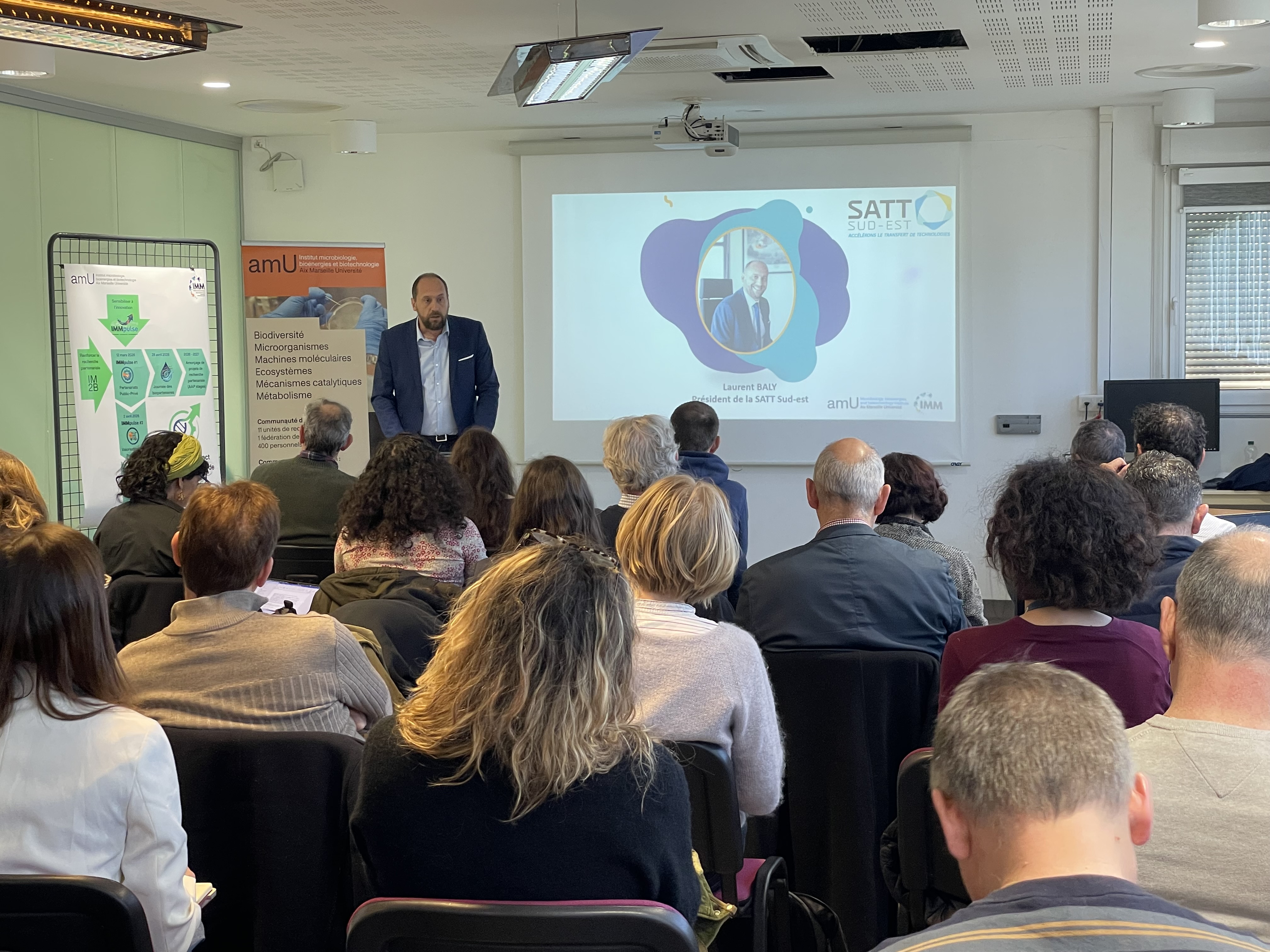
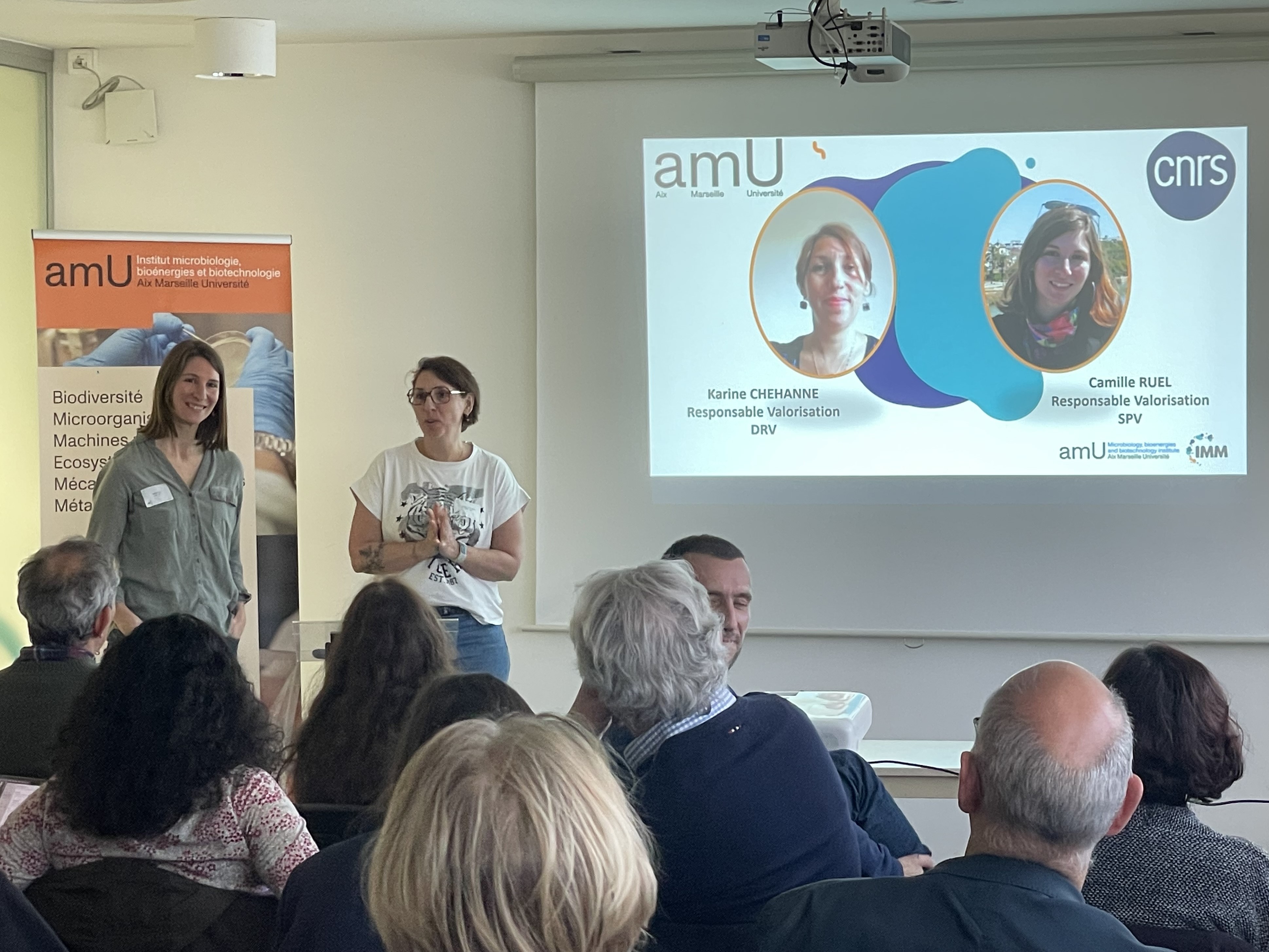
Attended by nearly 40 participants, the day was introduced by Laurent Baly, President of the Société d'accélération du transfert de technologies (SATT) Sud-Est, and Jérémy Wozniak, Innovation Officer at the Institut de Microbiologie de la Méditerranée (IMM). Opening the event, Laurent Baly quoted Victor Hugo, reminding the audience that "there is nothing in the world as powerful as an idea whose time has come", underlining the fact that innovation lies not only in invention, but in the encounter between an idea and a use. The morning's presentations provided a clearer understanding of the role played by those involved in technology transfer and the key stages in the process, from the identification of a scientific result to its transfer to the socio-economic world. The Aix-Marseille Université and CNRS commercialization departments provided details of their support missions, and explained the two main routes to commercialization: licensing to an existing company, or the creation of a start-up. The presentations also highlighted the importance of raising awareness of innovation, notably through innovation referents within laboratories and the C.U.R.I.E. network. In addition, the MER-Mission Europe pour la Recherche presented the various European calls for projects specifically targeting the TRL rise of public research projects.
The second part of the morning was devoted to pre-maturation and maturation programs, which are real levers for structuring and securing innovative projects. Programs run by CNRS, A*Midex, CEA and SATT Sud-Est were presented, illustrated by real-life feedback from Thierry Tron (iSm2), Damien Sorigué (BIAM) and Jean-Michel Bolla (MCT). These presentations provided a better understanding of the timeframes and stages involved in commercialization, from the patentability study to the market launch. Several examples from laboratories in the IM2B ecosystem showed how a research project can gradually evolve into an innovation, thanks to appropriate support and the mobilization of specific funding.
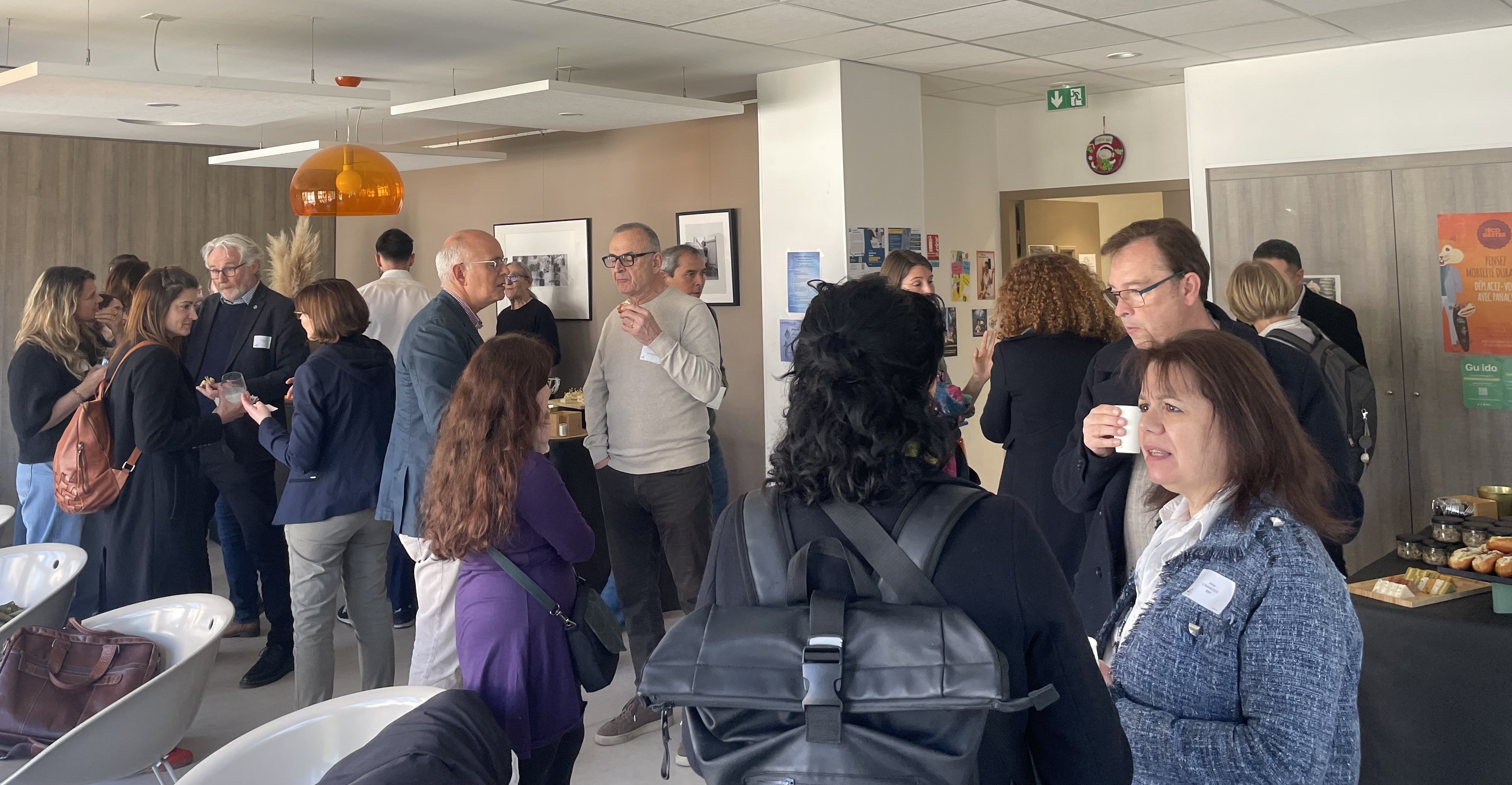
In conjunction with the lunch, a networking session enabled researchers and technology transfer professionals to discuss their projects. By providing concrete benchmarks and networking opportunities, IMMpulse #2 helped to strengthen the culture of commercialization within the scientific community.
This event is fully in line with IM2B's strategy of supporting its teams in their drive towards high-impact research, by facilitating the transition from invention to innovation.