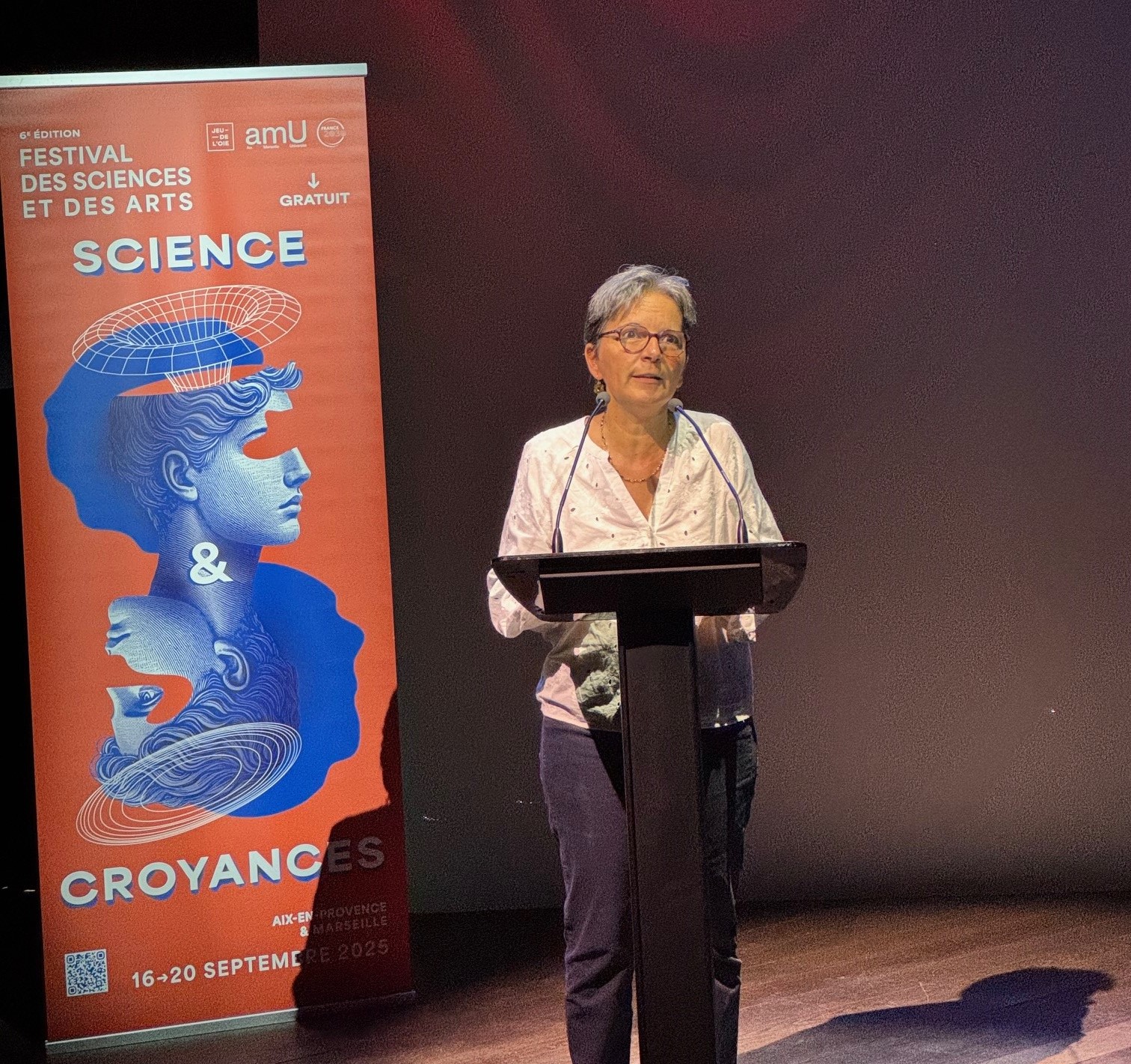
The 6th edition of the "Festival des sciences et des arts" took place between Aix-en-Provence, Aubagne and Marseille, from September 16 to 20. For this year 2025, the Festival's organizing committee - formerly the Jeu de l'Oie Festival - wanted to explore the links and interactions between science and beliefs.
For the 2025 edition of the Festival of the Science and Arts, Aix-Marseille Université (amU) and its partners have chosen a theme linking science and beliefs. While this initiative is not intended to pit science against beliefs, it is part of the "Stand up for Science" movement, as well as the "Choose France for Science" initiative, which promotes academic freedom and the integrity of scientific research. At a time when fake news is on the increase, scientific mediation and popularization are essential tools in the fight against misinformation and mistrust of science.

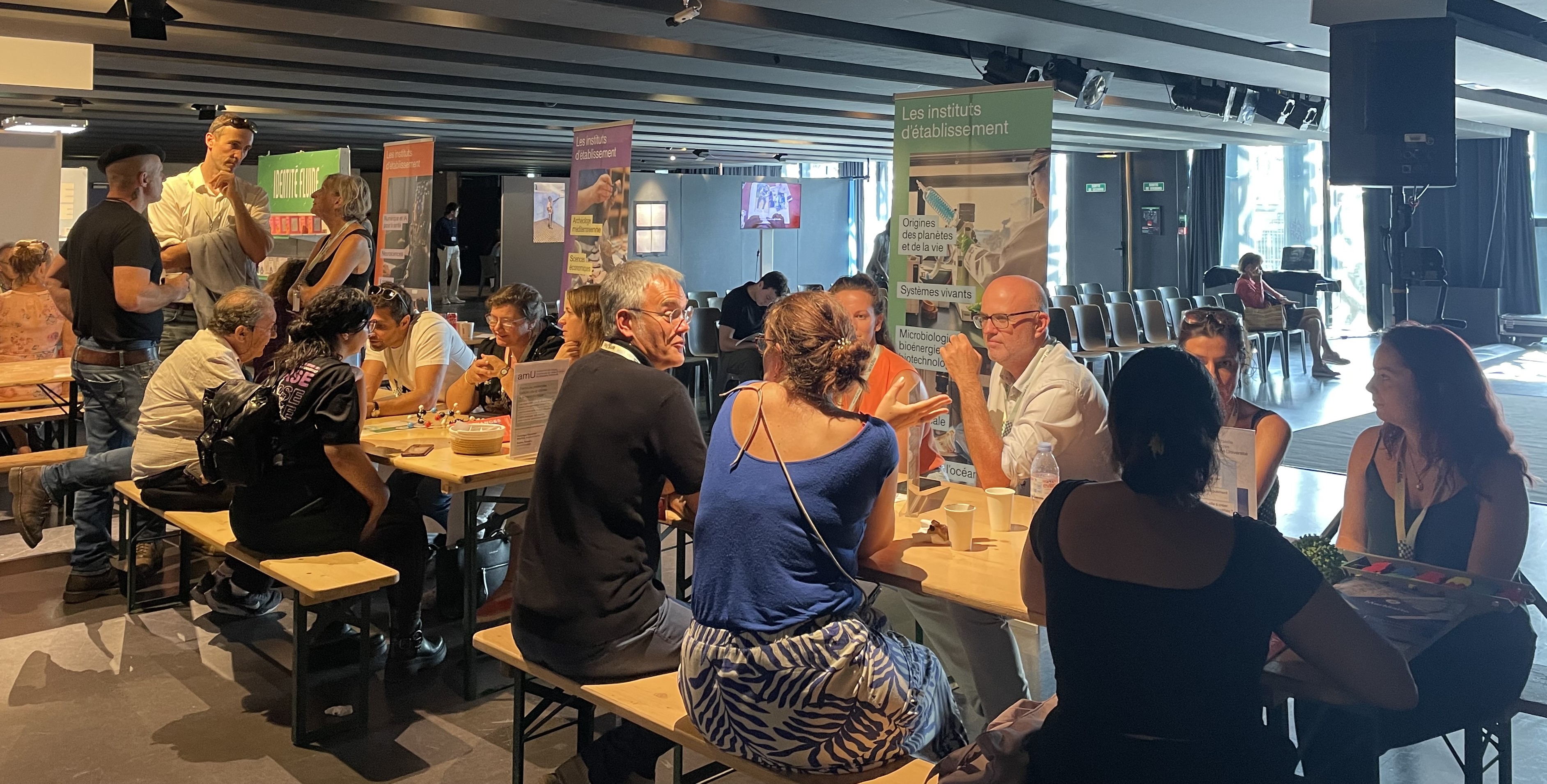
On Thursday September 18, the third day of the festival took place at the Museum of the civilizations of Europe and the Mediterranean (Mucem), beginning with words of welcome from Marie-Charlotte Calafat, Mucem's director of science and collections, and Laurence Mouret, dean of amU's faculty of science. Following the Poussière d'étoiles lecture by Éric Lagadec, astrophysicist at the Observatory of the Côte d'Azur, plunging us into a cosmic odyssey, and the round-table discussion dedicated to the exhibition "Lire le ciel. Sous les étoiles en Méditerranée", the public was invited to leave the auditorium for the Mucem forum. This was the venue for the "Goûtez aux sciences!" event organized by amU's Institutes. The aim of this "coffeehouse-debate" was to invite the public to discuss with researchers from different fields in a relaxed setting, around the same table.
A rewarding initiative for scientists and the public alike
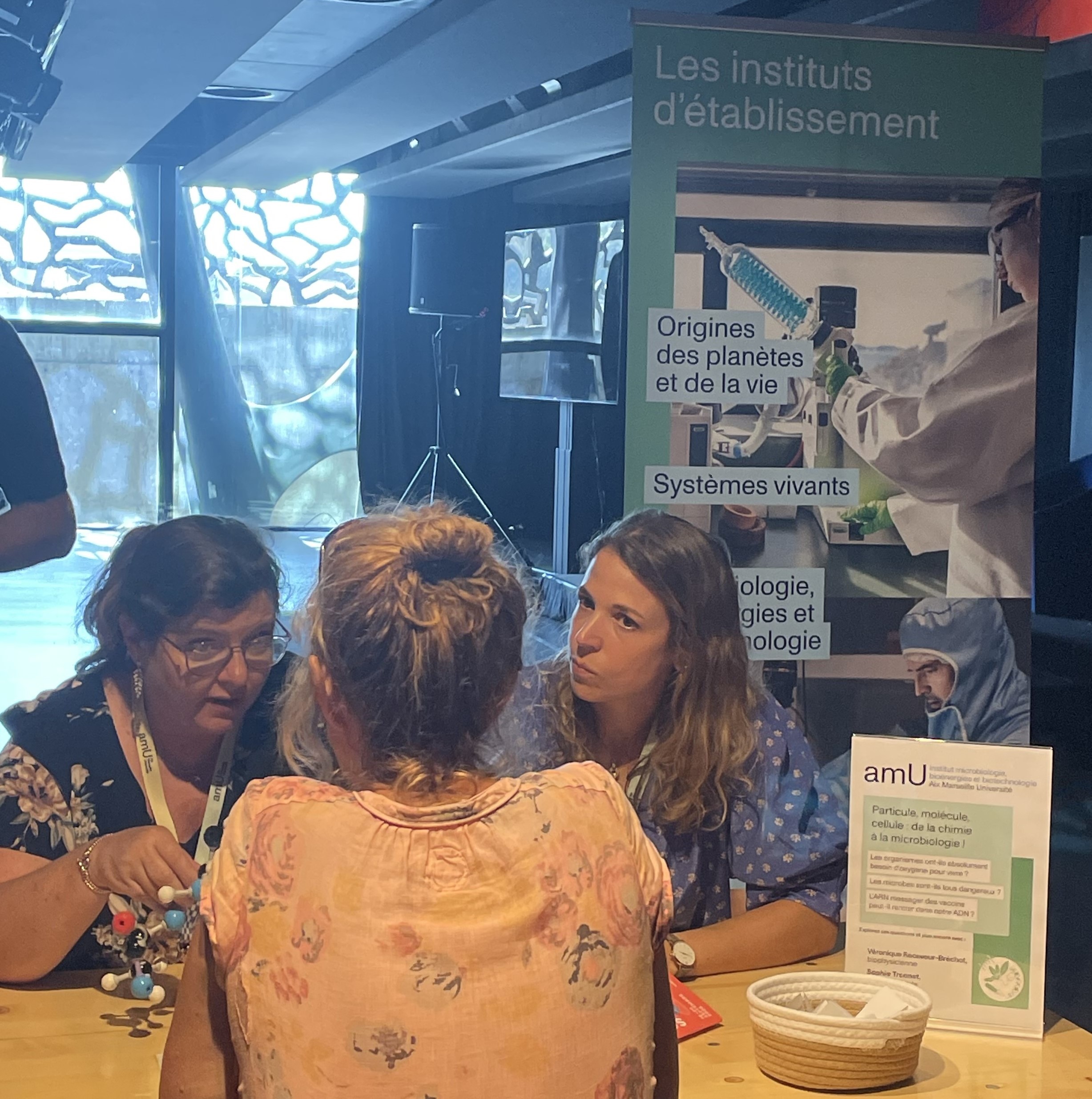
The Institute of Microbiology, Bioenergies and Biotechnology (IM2B) was represented by two ambassadors, Véronique Receveur-Bréchot, biophysicist in the Bioenergetics and Protein Engineering Laboratory (BIP), and Sophie Tronnet, microbiologist in the BiosCiences team at the Institute of Molecular Sciences of Marseille (iSm2).
"There are only dangerous microbes (?). Organisms need oxygen to live (?). Anything chemical is dangerous or bad for your health (?)." These were a few of the misconceptions that Véronique Receveur-Bréchot and Sophie Tronnet used to interact with attendees and discuss the scientific approach.
Sabrina, who has some knowledge of microbiology thanks to her academic background in biology, was able to exchange ideas with the two IM2B scientists. One of the highlights was understanding the research work of a biophysicist in a microbiology laboratory, highlighting the importance of interdisciplinary approach, one of the IM2B's major axes. The festival-goer, very interested in the theme of this 6th edition, confided that this discussion format is very enriching for a wide audience, even the uninitiated.
"We're not in our ivory tower"
For Sophie Tronnet and Véronique Receveur-Brechot, the "coffeehouse-debate" format complements and is just as necessary as general public conferences, promoting a more personalized exchange. Véronique Receveur-Brechot also insists that this type of event breaks with the image of the researcher in his "ivory tower" by going out to meet the public directly. The biophysicist also stresses the coherence of dwelling on the subject of the relationship between science and beliefs, given current events.
Sophie Tronnet was surprised to meet such a knowledgeable audience, given the relevance of the questions posed, particularly by Sabrina. The microbiology researcher was delighted with the very interesting exchanges with the audience, but also with researchers from different fields.
Popularizing science as the horizon
Laurence Mouret, dean of the Faculty of Science, introduced the afternoon's proceedings by denouncing the lack of confidence in science observed on the other side of Atlantic, and the questioning of scientific facts such as the safety of vaccines or the existence of climate disruption. When asked about this, Sabrina believes that ignorance or denial of certain scientific facts can sometimes lead to sectarian aberrations.
"It's important to show what we do as researchers"
The festival-goer adds that, from her point of view, popularizing science is very important, and she appreciates that researchers take the time to explain their work to the general public in a variety of formats: podcasts, videos or discussions at festivals of this type. Sophie Tronnet agrees, concluding by stressing the importance of exposing researchers' work to the general public: "It's important to show what we do as researchers.